

New Year reflections (gentle, real, and pressure-free)
This post includes simple year-end reflection questions for 2025 and gentle New Year intentions for 2026.
This time of year can feel complicated.
You might feel hopeful. Or tired. Or emotional for reasons you can’t quite explain. You might be proud of yourself — and also a bit disappointed. Or you might simply feel relieved that the year is ending.
If you don’t feel excited or “ready for a fresh start”, you’re not alone.
A new year doesn’t magically give us a new nervous system, a new body, or a new life. We bring ourselves with us. We carry everything with us: responsibilities, health worries, family pressures, work stress, and the parts of us that are still healing.
That’s why this period can be helpful for some people. Many of us take a few days off. Sometimes we take a week. This occurs either at the end of the year or at the beginning of the new one. And even if life doesn’t suddenly become easy, a pause can give your system something it rarely gets: rest.
When we rest, we often get a little more space to think. We step back. We see the bigger picture. We notice what’s been draining us — and what has been supporting us. Even a small change of pace can help the mind and body settle enough to reflect with more kindness.
And if you don’t get time off — or if your time off is taken up with caring, family, or catching up — you can still create a small pause. Even 10 minutes can help. You might have a warm drink. Take a short walk. Sit with a blanket. Simply look out of the window and let your eyes rest. Small pauses still count, and your nervous system still benefits.
So instead of pushing yourself into big goals, I’d like to offer a gentler way to reflect.
Think of this as a quiet check-in. A chance to notice what this year has been like for you, what helped you get through it, and what you might need more of going forward. No performance. No perfect plan. Just an honest look, with warmth.
And because change is not only about “willpower”, it helps to understand what happens inside us when we try to move forward:
When we force ourselves with fear or shame, the body can go into “alarm mode”.
And when we’re in alarm mode, it’s harder to learn new patterns or make good choices.
Real change is often a mix of safety and courage: feeling steady enough first, and then taking one small step into the unfamiliar.
Over time, those small steps add up — and the nervous system learns, “I can handle this.”
Reflecting on 2025 (with kindness, not judgement)
1. What I did in 2025
Take a moment to list highlights — big or small.
Did you keep going through a hard season? Support someone you love? Learn something new? Make time for nature, yoga, a friend, a book, or a quiet cup of tea?
2. Lessons I learned in 2025
Every year teaches us something.
Maybe 2025 taught you about boundaries, rest, grief, resilience, change, or how much you’ve been carrying.
If you’re not sure what you learned, try this question: “What would I say to a friend who had my year?”
3. Things I achieved in 2025
Achievements don’t have to be dramatic to count.
Sometimes success looks like: attending appointments, asking for help, doing the thing you were avoiding, or simply not giving up on yourself.
4. Challenges in 2025
What was hard this year — and how did you cope?
Naming challenges isn’t dwelling on the negative. It’s recognising what you’ve been living through.
If your nervous system has felt “on alert” (poor sleep, overwhelm, anxiety, irritability), that’s not weakness. It’s often a sign of overload — and it can be supported.
5. Things I’m grateful for in 2025
Gratitude doesn’t erase pain — it simply helps us notice what also held us up.
Who or what supported you? Even small things count: a kind message, a pet, a familiar walk, music, a warm bed, a moment of laughter.
Looking ahead to 2026 (gentle intentions)
6. What I’m letting go of in 2026
What no longer serves you?
This could be a habit, a belief, a commitment, or an old standard you’ve been using to judge yourself.
If you want a simple prompt:
“What am I done with pretending I can carry?”
7. What I want more of in 2026
Instead of rigid goals, think about how you want to feel.
More rested? More steady? More connected? More like yourself?
Then ask:
“What small actions would support that feeling?”
Choose something small enough that it feels doable on a tired day.
Your path is enough
Whether 2025 felt like progress, survival, loss, or a mixture of everything — your path is valid.
Growth doesn’t have to be loud. It can be quiet, steady, and deeply personal. And if you’ve been stuck in stress, anxiety, burnout, or poor sleep, it doesn’t mean you’re failing. It often means your system has been working hard to protect you — and it deserves care.
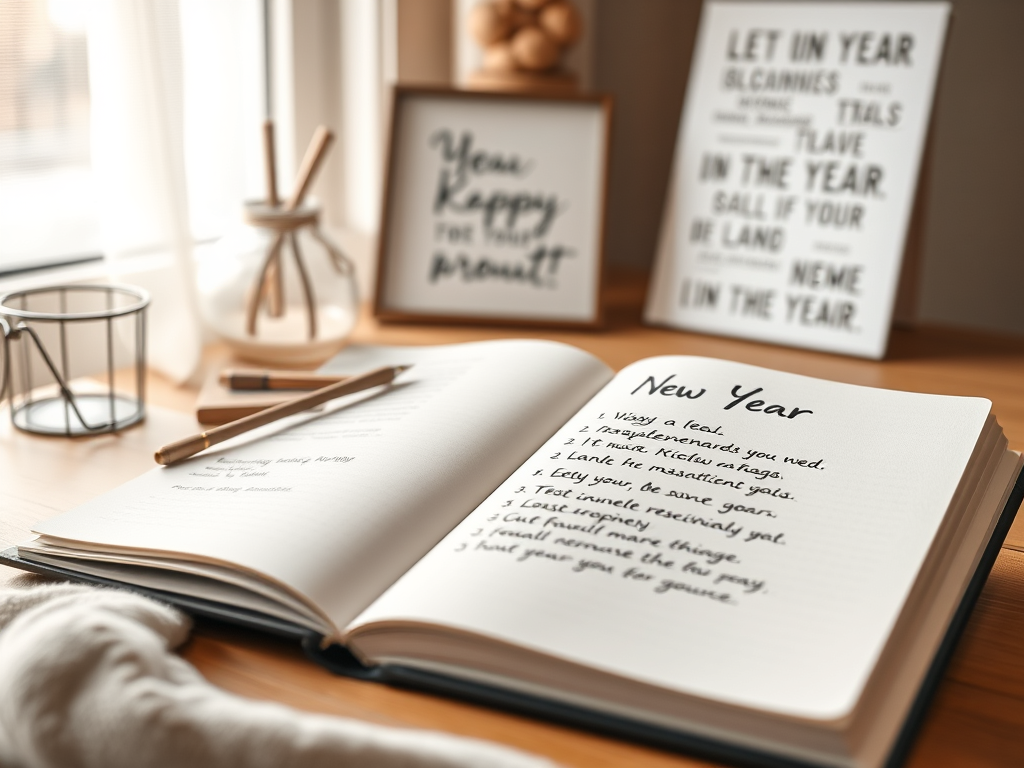
A gentle template you can use (in one sitting or over a few days)
- Memorable moments — what stands out from the year, even one moment?
- Key insights — what did 2025 teach you about what matters?
- Progress — where did you show courage, effort, or care?
- Challenges and coping — what was difficult, and what helped?
- Gratitude highlights — what brought comfort, meaning, or support?
- Letting go — what are you ready to release as you enter 2026?
- Focus — what do you want to create more space for?
A tiny “nervous system” pause (1 minute)
If you feel emotional while reflecting, try this:
- Look slowly around the room and name 5 neutral objects
- Feel your feet on the floor or your back supported by the chair
- Put a hand on your chest, or hold a cushion for gentle pressure
- Say quietly: “Right now, I’m here. Right now, I’m safe enough.”
If you’d like support in 2026
If stress, anxiety, burnout or sleep problems have been wearing you down, you don’t have to manage it alone.
I offer warm, practical online Human Givens therapy, with a focus on helping your nervous system settle and your life feel more manageable — especially for women over 50 who’ve been coping for a long time.
If you’d like to talk, you can contact me.

 MINDFULNESS HELPER