6 Essential Time Management Tips to Boost Your Productivity

Discover essential time management tips to boost productivity, reduce stress, and master your schedule. Unlock tricks to enhance your efficiency today!

In today’s fast-paced world, managing time well can make a huge difference in reducing stress and creating more space for what truly matters. With constant demands on our attention, it’s easy to feel overwhelmed. These six time management strategies will help you stay present, focused, and more in control of your day. Let’s explore!


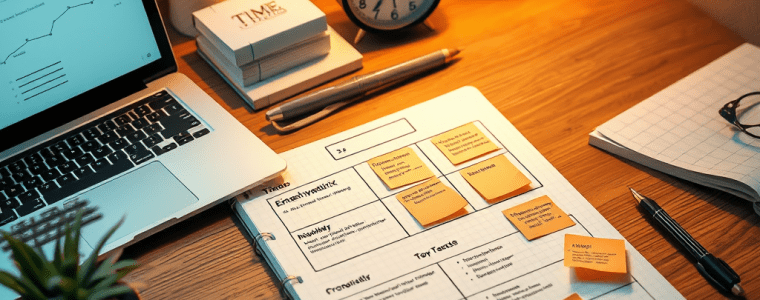
1️⃣ Prioritize Tasks with the Eisenhower Matrix 📊

Not all tasks are equally important. The Eisenhower Matrix is a simple tool to help you decide where to focus your energy.

  • Urgent & Important: Handle these tasks first. ✅ (e.g., a pressing work deadline)
  • Important but Not Urgent: Schedule these to prevent last-minute stress. 📅 (e.g., preparing for an upcoming meeting)
  • Urgent but Not Important: Delegate them if possible. 🤝 (e.g., routine administrative tasks)
  • Neither Urgent nor Important: Limit or remove these from your day. ❌ (e.g., excessive social media use)

💡 Why does prioritization matter? It helps you spend your time wisely, focusing on what truly contributes to your well-being and progress.


2️⃣ Set Clear Daily Intentions 🎯

Starting your day with a clear plan helps prevent decision fatigue and enhances focus.

  • Identify 3-5 key tasks 📖 (e.g., “Draft an article,” “Reply to essential emails”)
  • Break larger projects into smaller, manageable steps 🏗️ (e.g., Instead of “Write a report,” start with “Gather research”)
  • Reflect on progress 🎉 (Acknowledging what you accomplish builds motivation!)

🔹 How does intention-setting improve time management? It fosters clarity and reduces procrastination by giving you a structured approach to your day.


3️⃣ Use Time-Blocking for Better Focus ⏰

Time-blocking allows you to dedicate specific periods for different tasks, reducing decision fatigue and multitasking.

  • Assign time slots to key activities 📅 (e.g., “10-11 AM: Deep work on a project”)
  • Include buffer time for breaks ☕ (Rest is just as important as productivity!)
  • Stick to your plan as much as possible ✅ (Being consistent leads to better results!)

📌 Real-life example: A therapist sets specific hours for client sessions, admin work, and personal downtime to maintain balance.

🔹 What are the steps to master time-blocking? Start by identifying your priorities, estimating time realistically, and maintaining flexibility when needed.


4️⃣ Reduce Distractions and Protect Your Focus 🚫📱

Distractions can disrupt your flow, making tasks take longer than necessary. Try these strategies:

  • Turn off unnecessary notifications 🔕 (Use “Do Not Disturb” mode during deep work)
  • Set boundaries with colleagues and family 🚪 (Communicate when you need focus time)
  • Use focus apps to limit distractions 🚧 (Tools like Forest or Freedom can help!)

📌 Real-life example: A student struggling with focus puts their phone in another room while studying and takes breaks only after completing set tasks.

🔹 How can I manage interruptions more effectively? Designate specific times for checking emails and messages instead of reacting to them throughout the day.


5️⃣ Break Tasks into Manageable Steps 🏗️

Large tasks can feel daunting, leading to avoidance. Breaking them into smaller steps makes them easier to approach.

  • Focus on one step at a time 👣 (e.g., Instead of “Write a book,” start with “Outline key chapters”)
  • Set mini-deadlines ⏳ (Avoid last-minute stress by making steady progress)
  • Reward yourself when you complete a section 🎁 (Encourages motivation!)

📌 Real-life example: A freelancer struggling with a major project sets weekly goals instead of one overwhelming deadline.

🔹 Why does breaking tasks down help? It reduces stress and increases momentum, making progress feel more achievable.


6️⃣ Take Breaks to Restore Energy 🌿

Rest is essential for focus and creativity. The Pomodoro Technique is a simple way to ensure you balance work and rest.

  • Work for 25 minutes, then take a 5-minute break ⏲️ Or take a longer break within 45-60 minutes if it works better for you.
  • Step away from screens and move your body 🚶
  • Practice deep breathing or mindfulness 🌬️ to refresh your mind

📌 Real-life example: An IT worker uses Pomodoro sessions. This helps manage tasks effectively. They avoid feeling drained by long hours of screen time.

🔹 How does taking breaks improve productivity? Short pauses prevent burnout and help maintain consistent energy levels throughout the day.


Final Thoughts 📝

Time management isn’t about squeezing more tasks into your day—it’s about making space for what matters. By prioritizing effectively, setting realistic goals, and allowing time for rest, you can create a schedule that supports both productivity and well-being.

🌱 What is one small change you can make today to improve your time management? Share your thoughts below!


FAQ ❓

🔹 How can I improve my relationship with time? Shift your mindset—see time as a resource to nurture, not an enemy to battle. Be realistic about what you can achieve in a day.

🔹 How does the Eisenhower Matrix help? It allows you to focus on what truly needs attention rather than reacting to everything at once.

🔹 What is time-blocking? A structured way of organizing your day by assigning time slots for tasks to improve focus and efficiency.

🔹 Why are breaks important? They prevent burnout and help you return to tasks with a fresh perspective.

🔹 How can mindfulness help with time management? Being present with each task allows you to work with greater awareness and efficiency, reducing stress and mental clutter.

🔹 How can I delegate tasks effectively? Identify non-essential tasks that can be shared with others to lighten your workload.


Finding balance with your time is possible! 🌿 Take small steps, experiment with different strategies, and remember—time management is about creating a life that feels fulfilling, not just productive.

How to Deal with Feeling Overwhelmed: Essential Mental Health Tips

How to Change Your Thoughts to Feel Less Overwhelmed

This week, I had one of those moments where everything felt like too much. Maybe you’ve had those days too—the kind where you feel overwhelmed but can’t even put into words what’s wrong. For me, it started with the mountain of tasks waiting to be done.

As a therapist, I’ve learned a lot about how our emotions work. But I also practice these techniques in my own life because they make such a difference. One key thing I’ve learned—and often teach—is how much our thoughts can drive and intensify our feelings. Once I realized this, I developed a simple process that helps me and my clients regain control.

What I Did When I Felt Overwhelmed

Here’s a step-by-step approach I’ve found incredibly helpful:

  1. Feel It Without Judging It
    Start by naming and accepting the feeling. For me, it was “I feel overwhelmed.” This step is powerful. It removes some of the pressure to push the emotion aside, or wanting to get rid of it.
  2. Find the Thought Behind the Feeling
    Often, a thought is exaggerating the intensity of what I’m feeling. I paused and asked myself, “What thought is making me feel like this?” I realized my mind was saying: “I’ll never get everything done, and it’s going to spiral out of control.”
  3. Change the Thought or self-talk
    I decided to replace that unhelpful thought. I chose one that felt more balanced. It was the anti-dote:
    “I don’t need to do everything at once. I can focus on one thing. That’s enough for now.”
  4. Take One Small Action
    To reinforce the new thought, I took a small step. I started with one easy task on my list, just to create some momentum.

Why This Works

When we’re overwhelmed, it’s not just the tasks causing the feeling; it’s the thoughts about them that amplifies the feeling. Identifying and shifting those thoughts can take the edge off, making the feelings and tasks more manageable.


A Simple Metaphor to bear in mind: The Cloudy Sky

Think of your overwhelming emotions like a cloudy sky. The clouds are heavy, and it feels like a storm is coming. But when you change the thought that accompanies the feeling, the wind gently pushes the clouds apart. This allows some sunlight to get through. One by one, the sky becomes clearer, and things don’t feel so overwhelming.


My New Mantra:

Here’s something I say to myself.
“What thought is making my feeling worst? Change the thought, change the feeling.”

It’s a reminder that I have more power to pause, breathe and think when emotions start to take over.


How to feel calmer in stressful situations. Try It Yourself

If you’re feeling overwhelmed, here’s something i found helpful:

  1. Notice the feeling and accept it without judgment. Say: “It’s of all right for the to feel this way. I will pass as usual. I chose to take a few breaths to regain clarity'”
  2. Ask yourself: “What thought is making this worse?”
  3. Change the thought to something more helpful or balanced. Ask yourself: “What the antidote thought?”
  4. Take one small step to reinforce the new thought and to the result.

How to Deal with Feeling Overwhelmed: Essential Mental Health Tips

Feeling overwhelmed is something we all experience from time to time. Whether it’s juggling responsibilities at work, home, or life in general, it can leave you feeling stuck and powerless. Here’s a comprehensive guide to understanding and managing overwhelm effectively.


Understanding the Feeling of Overwhelm

What Does It Mean to Feel Overwhelmed?

Feeling overwhelmed is the emotional response to having too much to handle at once. It’s often accompanied by feelings of powerlessness, confusion, and even panic. Imagine trying to hold too many things in your hands; eventually, something will drop.

What Are the Common Triggers of Overwhelm?

  • Work pressures: Deadlines and high expectations.
  • Personal responsibilities: Caring for others, managing finances, or maintaining relationships.
  • Life changes: Moving, illness, or major transitions.
  • Perfectionism: Trying to do everything perfectly can add unnecessary pressure.

How Does Feeling Overwhelmed Affect Your Mental Health?

Overwhelm can lead to stress, anxiety, and even burnout. It can also disrupt sleep, lower your ability to focus, and affect decision-making. Long-term overwhelm may increase your risk of depression and physical health problems.


Recognizing the Signs of Being Overwhelmed

What Physical Symptoms Show Overwhelm?

  • Headaches
  • Fatigue or low energy
  • Muscle tension or body aches
  • Rapid heartbeat

How Can Emotional Responses Signal Overwhelm?

  • Irritability or frustration
  • Difficulty concentrating
  • Feeling tearful or on edge
  • A sense of hopelessness

Why Is It Important to Acknowledge These Signs?

Acknowledging these signs helps to intervene early and take steps to regain balance before it is too late. Ignoring them can lead to chronic stress and more significant mental health challenges.


Effective Strategies for Managing Overwhelm

What Are Some Immediate Techniques to Reduce Overwhelm?

  • Deep breathing: Take slow, deep breaths to calm your nervous system. Practice 7 / 11 breathing.
  • Grounding exercises: Focus on your surroundings or use the 5-4-3-2-1 technique to center yourself.
  • Break tasks into smaller steps: Focus on one manageable action at a time.

How Can Mindfulness and Meditation Help?

Mindfulness helps you focus on the current moment without judgment. Meditation trains your brain to manage stress and prevent spiraling thoughts. Even five minutes a day can make a difference.

What Role Does Time Management Play in Feeling Overwhelmed?

Time management reduces the chaos. Tools like to-do lists, planners, or apps can help you prioritize and delegate. The goal is to focus on what’s essential rather than trying to do everything. Each person will need a tool that works for them.


Building Long-Term Resilience Against Overwhelm

What Lifestyle Changes Can Reduce Overwhelm Over Time?

  • Exercise regularly: Physical activity releases endorphins, which combat stress.
  • Get quality sleep: A well-rested mind is more resilient.
  • Eat a balanced diet: Proper nutrition supports mental clarity and energy.

How Can You Create a Support System?

Share your feelings with trusted friends or family. A strong support network can provide perspective and practical help.

Why Is Self-Care Crucial for Managing Overwhelm?

Self-care replenishes your energy and prevents burnout. Whether it’s a hobby, quiet time, or a simple walk, self-care should be a non-negotiable part of your routine.


When to Seek Professional Help

How Do You Know If It’s Time to Consult a Therapist?

If overwhelm is persistent, interferes with daily life, or leads to feelings of despair, seeking professional help is essential.

What Are the Benefits of Professional Support?

A therapist can explain more in depth the process of overwhelm, show you tools tailored to your needs. They help you understand the root causes of overwhelm. They also teach effective coping mechanisms.

How Can Therapy Help You Develop Coping Mechanisms?

Therapy focuses on identifying unhelpful thought patterns, managing emotions, and building resilience to stress. Approaches like Human Givens therapy or cognitive-behavioral therapy (CBT) are particularly effective.


Conclusion: Embracing a Healthier Mindset

How Can You Shift Your Perspective on Overwhelm?

Remember, overwhelm is a signal—not a permanent state. It’s an opportunity to pause, reevaluate, and make changes.

What Are the First Steps You Can Take Today?

Start by identifying one overwhelming feeling and the thought behind it. Replace the thought with something more helpful, like “I can do one small thing at a time.”

How Can You Continue to Foster Your Mental Well-Being?

Incorporate daily habits like mindfulness, gratitude, and self-care. With time and practice, you’ll build resilience and feel more in control.

This simple process has been a game-changer for me, both personally and professionally. I’d love to hear if it works for you, too. Drop a comment or send me a message. Share your experience!

#ChangeYourThoughts #EmotionalWellness #OverwhelmRelief #TherapistTips #StressLessLiveMore